Our Mission: Unveiling the Secrets of Cancer Heterogeneity
The mission of our lab is to redefine translational cancer research by identifying novel treatment strategies that disrupt malignant clone function. To achieve this, we are actively investigating the molecular programs that regulate specific clone functions such as propagating activity, metastatic activity and treatment resistance. This will aid in our efforts to devise targeted treatment strategies to disrupt the function of these clones that are responsible for disease progression.
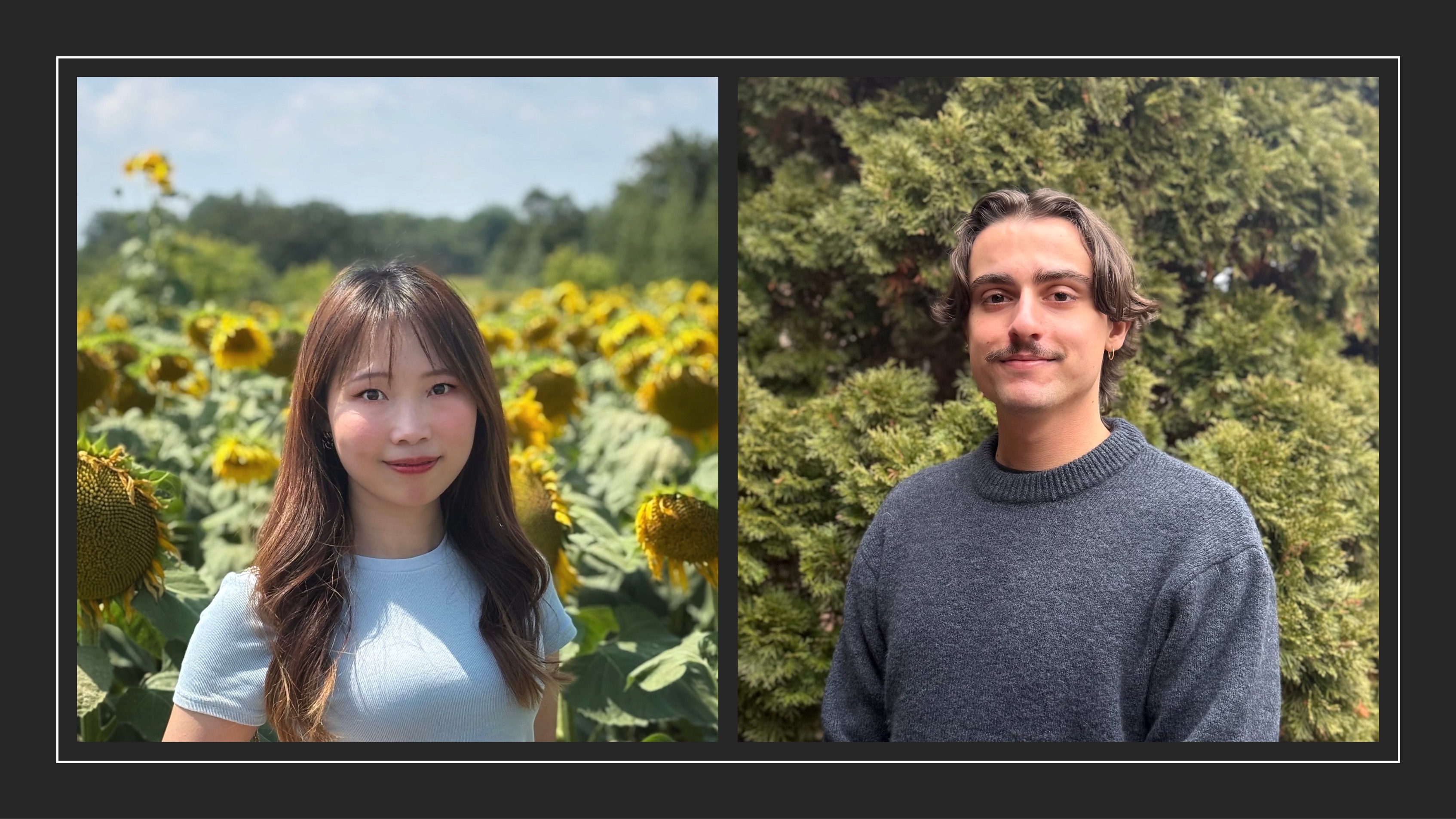
Welcome Dr. Jiahui (Jacob) Wang to the Nguyen lab!
We’re thrilled to welcome Dr. Jiahui (Jacob) Wang as the newest member of our lab! Jacob joins us with a PhD in Physiology, Cell and Developmental Biology from the University of Alberta and brings valuable industry experience from his previous role as a Scientist.
Jacob’s position is supported by the Canada Leads 100 Challenge through the University Health Network (UHN)—an ambitious initiative aimed at recruiting 100 world-leading early-career scientists to UHN. We’re proud that Jacob is among this exceptional cohort.
In his cutting-edge project, Jacob will draw on his industry-honed expertise to develop novel biomolecular tools to better characterize breast cancer stem cells, pushing the boundaries of what we can discover and achieve in this space.
CIHR Project Grant Results
Congratulations to Dr. Long V. Nguyen for receiving a Project Grant in the 2025 competition for his project titled: “Functional properties and genetic dependencies of phenotypic plasticity in human triple-negative breast cancer“. He also received the CIHR Institute of Cancer Research’s Early Career Researcher Award in Cancer.
This work will be supported by the lab of Dr. Federico Gaiti (https://www.gaitilab.com/), who was a co-applicant on the grant.
Thank you to CIHR and the Institute of Cancer Research for this tremendous support for our work!
Dr. Sahil Sharma receives the Princess Margaret Cancer Centre Postdoctoral Fellowship Award!
Congratulations to Sahil who received a Postdoctoral Fellowship Award from the Princess Margaret Cancer Centre to support his fellowship training and his project titled: “Unraveling molecular vulnerabilities in propagating TNBC clones via DNA barcoding and CRISPR functional genomics”.
Dr. Sarah Kronheim presents her work at the 2025 EACR Congress in Lisbon
Sarah received a Travel Grant to attend the 2025 EACR Congress in Lisbon to present her work on “Dynamics and chemotherapy response of single cell-derived human breast cancer clones” on June 18, 2025 in the Joint EACR-ASPIC Symposium on Cancer Therapy Resistance. Her oral presentation was very well received – well done, Sarah!
This work was supported by the Princess Margaret Cancer Foundation, Canadian Cancer Society, and Marathron of Hope Cancer Centres Network/Terry Fox Research Institute.
New publication alert!
The latest publication from the Nguyen, Caldas and Rueda labs. This was a massive effort from a fantastic team and we’re grateful to everyone on the paper for their work on this project! https://doi.org/10.1016/j.celrep.2025.115699
In this paper we used expressed lentiviral barcoding to track the clonal growth of over 20,000 single-cell-derived clones in 110 xenografts from 26 patient-derived breast cancer xenograft models. We also profiled 167,375 single-cell RNA profiles to link clonal growth with gene expression.
We show that extremely rare cells can give rise to clones with propagating activity (frequency 1 in 15,000 – 1 in 116,000). Dominant propagating clones regenerate the full model-specific transcriptional landscape and there is a conserved differentiation program.
In vivo clone doubling time, a metric used to quantify the rate of clonal growth, reveals breast cancer subtype-specific differences in clonal fitness.
Dichotomous cell populations in basal breast cancer distinguish between functional clone types based on differential signaling and metabolic responses. This suggests it is possible to enrich for cells with propagating activity.
Dominant propagating clones display dynamic transcriptional plasticity which we illustrate by profiling gene expression across generations of cells derived from single starting cells.
Altogether, we illustrate the dynamic nature of transcriptional plasticity in propagating clones, highlighting their ability to evolve, adapt, and mature into dominant clones that constitute the majority of tumor cells in secondary xenografts, all originating from a single barcoded cell.